
Table of Contents
- What IV Therapy for Athletes Actually Does
- Faster Rehydration: Electrolytes and Athletic Performance
- Accelerating Muscle Recovery and Reducing Inflammation
- Key Nutrients in Athletic IV Drips: Vitamins, Minerals, and More
- How Long Does IV Therapy Take? A Realistic Timeline
- Is IV Infusion Therapy for Recovery Worth It? Risks and Considerations
- Conclusion: Building a Medically Guided Recovery Protocol
- Frequently Asked Questions
Last Updated: September 7, 2026
What IV Therapy for Athletes Actually Does
Intravenous (IV) therapy for athletes delivers fluids, electrolytes, vitamins, and other nutrients directly into the bloodstream, bypassing the digestive system entirely. This method of iv therapy for athletes offers near-total nutrient absorption and rapid physiological effect, unlike oral supplementation.
At The Boulevard Wellness, we offer medically guided IV protocols for high performers, addressing the specific demands of training, competition, and recovery with precision, targeting hydration status, muscle repair, and energy systems directly.
Athletic training depletes key nutrients and fluids that are difficult to replenish quickly enough through diet alone. This guide breaks down the physiological benefits of iv infusion therapy for recovery, what a session involves, and the considerations every athlete should weigh before booking.
Faster Rehydration: Electrolytes and Athletic Performance
Rehydration is the most immediate and measurable benefit of IV therapy. During intense exercise, the body loses significant fluid and electrolytes through sweat, impairing performance and prolonging recovery if not addressed. Intravenous delivery restores intravascular volume directly, correcting dehydration more efficiently than drinking.
Sodium, potassium, and magnesium are critical for muscle contraction, nerve signaling, and fluid balance. An IV drip formulated for athletic recovery provides these minerals in precise concentrations, supporting rapid rehydration and preventing the cramps and fatigue associated with depletion, particularly valuable for endurance athletes.
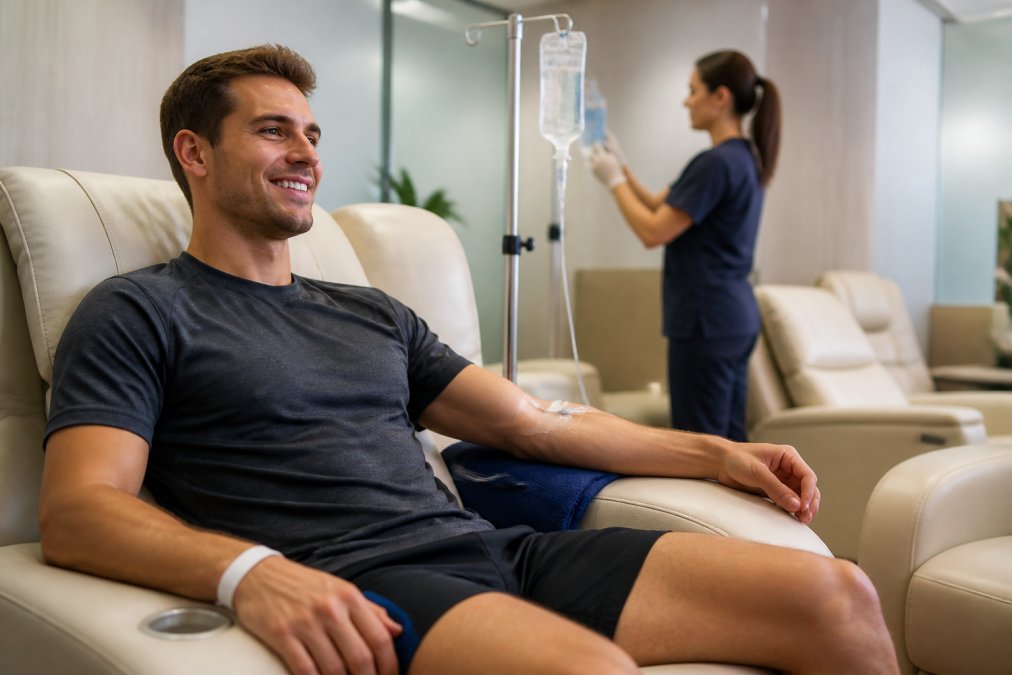
A session can correct significant dehydration and restore electrolyte balance in under an hour, a timeline oral rehydration cannot match, making IV therapy a strategic tool for recovery and pre-competition preparation.
Accelerating Muscle Recovery and Reducing Inflammation
Beyond hydration, IV therapy is sought after for its potential to speed up muscle recovery and manage inflammation. Strenuous exercise causes micro-tears in muscle tissue and a natural inflammatory response essential for adaptation, but it also contributes to post-workout fatigue and soreness.
Nutrients delivered intravenously are available to tissues immediately, without the variability of digestive absorption, particularly beneficial in the critical window after training, when the body is primed to absorb nutrients for repair.
This is where iv infusion therapy for recovery moves beyond simple hydration. By supporting tissue repair and addressing systemic inflammation, IV protocols may help athletes return to training sooner with less residual soreness, contributing to more consistent performance over a training cycle.
The Biological Mechanisms at Play
When you train hard, mechanical stress activates satellite cells to begin muscle repair, a process requiring a steady supply of amino acids, particularly leucine, which triggers muscle protein synthesis. An IV drip containing essential amino acids bypasses gastric emptying delays, delivering these building blocks straight to the bloodstream within minutes.
The acute inflammatory response clears cellular debris and signals repair, but excessive inflammation can impair recovery. IV formulations often include antioxidants like glutathione and vitamin C to regulate this response. Glutathione, the body’s primary intracellular antioxidant, can become depleted under heavy training loads; delivering it intravenously restores stores more effectively than oral supplementation, which has poor bioavailability.
What the Evidence Actually Shows
The strongest evidence for IV therapy relates to rehydration and electrolyte balance. For muscle repair, the research is more nuanced: raising plasma amino acid concentrations stimulates muscle protein synthesis, but the magnitude depends on training status and timing relative to exercise.
Well-nourished athletes with adequate protein intake may not see dramatic additional benefits from IV amino acids. However, athletes in heavy training blocks, those with appetite suppression after intense sessions, or those with gastrointestinal issues may benefit more substantially. IV therapy is most effective when targeted to a specific deficiency or recovery bottleneck.
The Timing Window That Matters
Most practitioners agree the post-exercise window is most critical. Within 30 to 60 minutes after training, muscle cells are primed to take up nutrients, making this when an IV infusion has its greatest impact (PubMed). Some athletes also use IV therapy before competition to bolster antioxidant defenses.
For athletes training twice a day or competing in multi-day events, IV therapy between sessions can compress recovery time. A typical protocol involves a hydration-focused drip with amino acids and glutathione within an hour of the first session, allowing repair while the athlete rests.
The practical takeaway is that IV therapy for muscle recovery works best when it is timed to the post-exercise window and formulated to address the specific demands of your training. A generic drip may provide hydration benefits, but a targeted protocol with amino acids and antioxidants can meaningfully support the repair process when used strategically.
Comparing IV Delivery to Oral Recovery Strategies
Oral nutrition is the foundation of any recovery plan. A protein shake with 20-40 grams of whey or casein consumed within an hour of training provides the same amino acids found in IV formulations. The difference is absorption rate: oral ingestion peaks plasma amino acid levels in 60-90 minutes, while IV delivery peaks in 15-20 minutes, meaningful only for those with aggressive recovery timelines.
An IV drip can deliver 500-1000 mL of fluid with precise electrolyte concentrations and a full spectrum of nutrients in a single session. Replicating that orally would require consuming multiple liters of fluid and numerous supplements over several hours, impractical for many athletes, particularly those with sensitive stomachs.
IV therapy should be viewed as a complement to, not a replacement for, solid nutritional practices. The athletes who see the best results maintain a strong baseline diet and use IV therapy strategically to address specific gaps.
Key Nutrients in Athletic IV Drips: Vitamins, Minerals, and More
The effectiveness of an IV drip depends entirely on its formulation. Athletic protocols are built around vitamins, minerals, and amino acids chosen for their roles in energy production, tissue repair, and antioxidant defense. Understanding what is in the bag is the first step to evaluating a protocol.
Vitamin C and B-Complex for Energy and Oxidative Stress
Vitamin C is a potent antioxidant that neutralizes oxidative stress from intense exercise and supports immune function, which can be suppressed during heavy training. B-complex vitamins, including B12 and B6, are essential for cellular energy production.
This combination manages cellular damage from training and maintains energy systems for peak performance, helping combat fatigue from high training volumes.
Magnesium, Glutathione, and Amino Acids for Repair
Magnesium is involved in hundreds of biochemical reactions, including muscle function and protein synthesis, and is one of the most common deficiencies in active individuals. Glutathione, the body’s master antioxidant, reduces oxidative stress. Amino acids are the building blocks of protein, directly supporting muscle repair.
These components form the foundation of recovery-focused drips, providing raw materials for repair and antioxidants to manage training stress.
How Long Does IV Therapy Take? A Realistic Timeline
A typical IV therapy session for athletic recovery lasts between 45 and 60 minutes, including consultation, setup, and infusion time.
Infusion time depends on volume and formulation: a standard hydration drip may run in 30 to 45 minutes, while a larger bag with additional vitamins might take closer to an hour. After the drip, there is no required downtime.
In the time it might take to prepare meals or travel to a clinic, an athlete can complete a full rehydration and nutrient delivery session.
Is IV Infusion Therapy for Recovery Worth It? Risks and Considerations
IV therapy is not a substitute for fundamental training and nutrition habits. The decision to incorporate it should be based on your specific training load, recovery challenges, and health status.
Understanding the Scientific Limitations
The scientific evidence on IV therapy for athletic performance in healthy individuals is still evolving. Many claimed benefits are based on physiological principles rather than large-scale clinical trials. For a well-nourished athlete with no underlying deficiencies, the performance-enhancing effect may be minimal.
The strongest application of IV therapy is for rapid rehydration and electrolyte replenishment after significant fluid loss. For general recovery and wellness, the evidence is more mixed. A responsible provider will be transparent about these limitations.
Anti-Doping Compliance: What Competitive Athletes Must Know
For competitive athletes, a critical consideration is compliance with anti-doping regulations. The World Anti-Doping Agency (WADA) has specific rules regarding intravenous infusions. While the details can change, athletes are generally advised to verify that any infusion, including the volume and substances used, complies with current WADA standards before undergoing treatment. The World Anti-Doping Agency’s current prohibited list and methods provides the definitive guidance on what is permitted.
Under the current WADA code, intravenous infusions are prohibited in-competition unless they meet specific criteria (wada-ama.org). The rule generally permits infusions of up to 100 mL per 12-hour period, but larger volumes are only allowed for hospital admissions, surgical procedures, or clinical investigations. A typical 500-1000 mL hydration drip is not permitted during the in-competition window unless an approved medical exemption exists.
For athletes subject to USADA testing, the rules mirror WADA standards. Several high-profile cases have involved athletes receiving IV fluids exceeding permitted volume, resulting in sanctions. IV therapy should be scheduled in the training or recovery phase, not on competition day.
Competitive athletes must verify WADA/USADA compliance before any IV session. A standard hydration drip of 500-1000 mL is prohibited in-competition under current rules. Schedule IV therapy during training blocks, not on event days.
The Real Risks: Infection, Fluid Overload, and Vein Damage
Beyond regulatory concerns, there are genuine medical risks. The most serious is infection: any time a needle breaks the skin, there is a risk of introducing bacteria into the bloodstream. In a clinical setting with proper sterile technique, this risk is low but not zero. Cases of sepsis at unregulated wellness clinics have been reported, highlighting the importance of proper medical oversight.
Fluid overload is another consideration. While healthy athletes rarely experience complications from a single 500-1000 mL infusion, individuals with underlying heart or kidney conditions may be at risk. Symptoms include headache, swelling, and shortness of breath. A thorough medical screening should identify any contraindications.
Vein damage and infiltration are also possible. Repeated IV access in the same vein can cause phlebitis or scarring over time, so rotating access sites is important. A skilled practitioner will use ultrasound guidance for difficult access and stop immediately if there is any sign of infiltration.
The Cost-Benefit Question for Amateur Athletes
For amateur athletes, the financial consideration is significant. A single IV therapy session typically costs between $150 and $350. Compare this to oral supplementation: a month supply of a comprehensive electrolyte and recovery regimen might cost $50-100, and high-quality protein powder costs roughly $1-2 per serving.
For athletes who train professionally or compete at a high level where every day of recovery matters, the cost may be justified. For amateur athletes training a few times per week, a well-designed oral nutrition plan can achieve similar results at a fraction of the cost, except where rapid rehydration is critical, such as after a marathon.
A practical middle ground is to use IV therapy selectively, after particularly grueling events, during peak training blocks, or when traveling. This targeted approach provides benefits when they matter most while keeping costs manageable.
Medical Oversight Is Non-Negotiable
Medical oversight is non-negotiable. A qualified professional will review your health history, ensure the formulation is appropriate, and administer the therapy in a safe clinical environment.
When evaluating a provider, ask about medical credentials, experience with athletes, and protocols for handling adverse reactions. A legitimate practice will have a physician or nurse practitioner involved in treatment planning, use sterile single-use equipment, and have emergency protocols in place. Avoid facilities that offer IV therapy in non-clinical settings or make exaggerated claims.
Conclusion: Building a Medically Guided Recovery Protocol
IV therapy for athletes offers a direct, efficient method for addressing the hydration and nutrient demands of intense training. Its primary value lies in rapid rehydration and electrolyte replenishment, with potential benefits for muscle recovery and inflammation management when formulated correctly. The key is to treat it as one component of a comprehensive recovery strategy.
The decision to pursue IV therapy should be made with a qualified medical provider who can assess your individual needs. At The Boulevard Wellness, our approach is built on clinically personalized treatment plans, combining IV infusions with a broader focus on longevity and performance. To explore whether IV therapy fits your recovery protocol, book an appointment with The Boulevard Wellness.
Frequently Asked Questions
Are IV drips banned in sports by WADA or USADA?
The World Anti-Doping Agency (WADA) prohibits intravenous infusions of more than 100 mL per 12-hour period unless there is a medical exemption or the infusion is received during a hospital stay or clinical investigation. This means many routine wellness IV drips, regardless of their contents, are not permitted for athletes subject to anti-doping rules. Always check current WADA and USADA regulations, and consult with a physician who understands competitive sports rules before booking a session.
How quickly does IV therapy replenish electrolytes compared to oral intake?
IV therapy delivers fluids and electrolytes directly into the bloodstream, bypassing the digestive system. This provides rapid fluid and electrolyte replenishment, which can be beneficial when rehydration needs to happen quickly or when gastrointestinal distress prevents adequate oral intake. Oral sports drinks are effective for general hydration but take longer to absorb. The choice depends on your timeline, the intensity of your training, and whether you can tolerate drinking enough fluids.
Is there a downside to IV hydration for athletes?
IV hydration carries some risks. The most common are bruising, swelling, or infection at the insertion site. More serious risks include fluid overload, electrolyte imbalances, and allergic reactions to the infusion components. These risks are minimized when a qualified medical professional administers the IV in a clinical setting. IV therapy is not a substitute for proper daily hydration and nutrition, and it does not address the root causes of fatigue or underperformance.
Why do athletes feel improved recovery after an IV infusion?
The improvement often comes from correcting dehydration and nutrient deficiencies that impair recovery. IV infusion therapy for recovery provides high concentrations of vitamins, minerals, and fluids directly into the bloodstream, ensuring rapid nutrient absorption. This can help reduce post-workout fatigue, support muscle repair, and ease symptoms related to oxidative stress. The effect is most noticeable when you are genuinely dehydrated or depleted, rather than as a routine performance boost.