
Table of Contents
- What IV Vitamin Therapy Is and How It Works
- The Bioavailability of Intravenous Vitamins Compared to Oral Supplements
- What the Clinical Evidence Says About IV Vitamin Therapy
- IV Infusion Therapy for Recovery and Performance
- IV Vitamin Therapy Side Effects and Safety Considerations
- How to Approach IV Vitamin Therapy: A Practical Framework
- Frequently Asked Questions
Last Updated: September 17, 2026
What IV Vitamin Therapy Is and How It Works
IV vitamin therapy is the practice of delivering vitamins, minerals, and fluids directly into the bloodstream through a vein, bypassing the digestive system entirely. An intravenous drip gives nutrients a direct route to systemic circulation, which is the core of the science behind iv vitamin therapy. (Source: the National Institutes of Health Office of Dietary Supplements)
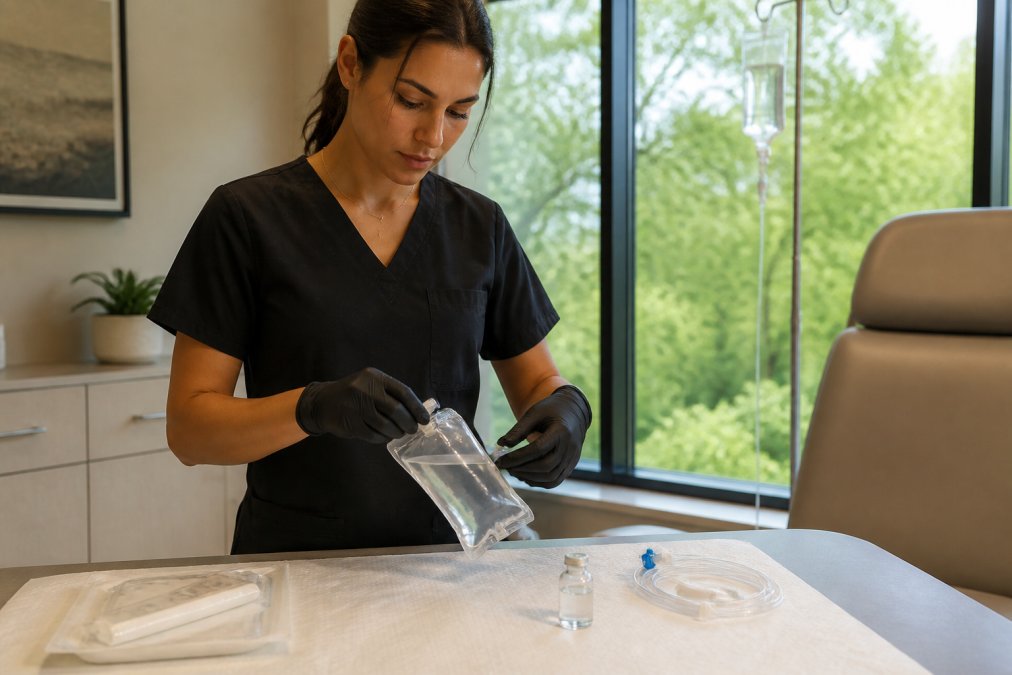
The difference between oral supplements and an intravenous drip
Oral supplementation has to survive the gastrointestinal tract. Stomach acid, digestive enzymes, and the intestinal lining all act as filters, and only a fraction of what you swallow reaches systemic circulation. An intravenous drip skips that filtering process. Every milligram enters the bloodstream at full strength, which is precisely why the route of administration matters more than the ingredient list.
The Bioavailability of Intravenous Vitamins Compared to Oral Supplements
Bioavailability of intravenous vitamins is close to complete, while oral absorption varies widely by nutrient, dose, and the state of your gut. That gap is the single most cited argument for IV delivery, and it is also where marketing claims tend to outrun the evidence.
Why bypassing the gastrointestinal tract changes nutrient absorption
Nutrient absorption through the gut is rate-limited and variable. Bypassing the gastrointestinal tract means the dose you receive is the dose that reaches circulation, with no first-pass metabolism and no dependence on transporter saturation. For someone with malabsorption from a gastrointestinal condition, that difference can be meaningful. For a well-nourished adult with a healthy gut, the same dose may simply be excreted.
IV therapy is not a shortcut around a poor diet. If your intake is adequate and your gut absorbs normally, the extra nutrients largely leave through your kidneys. Spending on infusions before addressing sleep, protein intake, and hydration is a common mistake.
What the Clinical Evidence Says About IV Vitamin Therapy
Clinical evidence for IV vitamin therapy is strongest in specific, narrow settings and weakest for general wellness. That distinction matters more than any single study, and it is where most commercial clinics lose credibility.
Where the evidence is solid
The strongest support comes from situations where oral intake is impossible, inadequate, or unreliable:
- Documented micronutrient deficiency with malabsorption. Conditions like Crohn’s disease, celiac disease, or short bowel syndrome can prevent oral vitamins from reaching therapeutic blood levels. In these cases, IV delivery is not a wellness trend, it is a clinical necessity.
- Severe dehydration or electrolyte imbalance. When a patient cannot keep fluids down due to illness, surgery, or chemotherapy, IV fluids and electrolytes are standard of care. The evidence here is not controversial.
- Perioperative and hospital protocols. Surgical patients often receive IV vitamins and minerals as part of enhanced recovery protocols. These are controlled, dosed, and monitored by clinicians, not marketed as “drips.”
- Specific deficiency states. Scurvy (vitamin C deficiency), severe B12 deficiency with neurological symptoms, and refeeding syndrome are all conditions where IV replacement is well-documented and guideline-supported.
Where the evidence thins out
For general wellness, energy, immunity, or “detox” claims in otherwise healthy adults, the evidence is weak to nonexistent. A few specific gaps:
- Hangover recovery. The placebo effect is a well-documented confounder in hangover studies. Hydration helps, but the vitamin component has not been shown to accelerate alcohol clearance or reduce symptoms beyond what fluids alone provide.
- Routine energy and immunity. If you are not deficient, IV vitamins do not make you more energetic or immune. Water-soluble vitamins in excess are excreted through urine, and fat-soluble vitamins can accumulate to toxic levels.
- Athletic performance. Most studies on IV vitamin therapy for performance show no ergogenic benefit beyond rehydration. The exception is correcting a diagnosed deficiency, which is a medical treatment, not a performance enhancer.
- Long-term health outcomes. This is the biggest blind spot. There are no large, long-term randomized controlled trials on frequent, repeated IV vitamin therapy in healthy adults. We do not know the cumulative effects of weekly or monthly infusions over years. The absence of evidence is not evidence of absence, but it is a reason for caution, not enthusiasm.
The standardization problem
Infusion blends vary widely between clinics. There is no universal protocol for a “recovery” or “immunity” drip, and concentrations are often not disclosed. This variability makes it impossible to compare results across providers or across studies. A ” Myers’ Cocktail” at one clinic may contain different doses than the same-named drip at another. This lack of standardization is a fair reason to ask any provider exactly what is in the bag, why those doses were chosen, and what evidence supports that specific combination.
The placebo effect deserves honest treatment here. Feeling better after an infusion is real, but the cause may be the ritual, the hydration, the attention, or the expectation rather than the vitamins themselves. A clinician who will not say that out loud is selling, not treating.
What this means for you
If you have a diagnosed deficiency or a condition that prevents oral absorption, IV therapy is a legitimate medical tool. If you are a well-nourished adult seeking a wellness boost, the evidence does not support the claim. The most honest position is that IV vitamin therapy is a precise delivery method for specific problems, not a general health tonic.
IV Infusion Therapy for Recovery and Performance
IV infusion therapy for recovery is most defensible when it targets hydration and electrolyte balance rather than vague performance gains. Athletes and active adults lose fluid and electrolytes through sweat, and rapid repletion can support how you feel in the hours after hard training.
Ask for your fluid volume and electrolyte composition in writing before the infusion. A provider who tracks what went in, and when, can spot patterns over time. A provider who cannot is guessing.
IV Vitamin Therapy Side Effects and Safety Considerations
IV vitamin therapy side effects are usually mild and short-lived, but the route is not risk-free. Common reactions include bruising or pain at the catheter site, a cold sensation in the arm, and lightheadedness if the infusion runs too fast. More serious risks are less common but real: infection from poor sterile technique, fluid overload in people with heart or kidney disease, and irritation of the vein.
Drug-nutrient interactions: the safety topic most guides skip
This is the gap. Most articles on IV vitamin therapy mention side effects but ignore how IV nutrients interact with prescription medications. That omission is dangerous, because the interactions are real, mechanistically understood, and clinically significant.
Drug-nutrient interactions are the safety topic competitors routinely skip. If you take prescription medications, disclose every one of them before any infusion. A provider who does not ask is not practicing safely.
Kidney function, fluid overload, and who should avoid treatment
Kidney function is the first gate. Your kidneys clear excess water-soluble vitamins and electrolytes, so impaired kidney function raises the risk of accumulation and fluid overload. Anyone with chronic kidney disease, heart failure, or uncontrolled hypertension should have a clinician review the plan first. Fluid overload can worsen heart failure and cause pulmonary edema.
Other contraindications and precautions
- Pregnancy and breastfeeding. Safety data on IV vitamin therapy during pregnancy is limited. High-dose vitamins can cross the placenta and affect fetal development. Avoid unless specifically prescribed by an obstetrician.
- Active infection. Infusing fluids and nutrients during an active infection can worsen outcomes in some cases. The body’s inflammatory response may be altered by sudden nutrient loads.
- Known allergies. Allergies to specific vitamins, preservatives, or components of the infusion bag are rare but possible. A history of reactions should be disclosed.
- G6PD deficiency. High-dose vitamin C can cause hemolysis in people with glucose-6-phosphate dehydrogenase deficiency (Vitamin C-induced Hemolysis: Meta-summary and Review of Literature). This is a genetic condition more common in certain populations, and screening may be warranted.
What to do before and after a session
Before: disclose all medications, supplements, and health conditions. Ask for the exact composition of the infusion in writing. Have your kidney function and electrolyte levels checked if you have any chronic condition.
How to Approach IV Vitamin Therapy: A Practical Framework
Treat IV therapy as a targeted tool, not a standing habit. The framework below keeps it grounded in evidence and safety.
| Step | What to Do | Why It Matters |
|---|---|---|
| 1. Baseline testing | Check serum levels before infusing | Confirms a real deficiency, not a guess |
| 2. Medication review | Disclose every drug and supplement | Prevents drug-nutrient interactions |
| 3. Set a goal | Name the outcome you want | Distinguishes treatment from a wellness fad |
| 4. Dose and route | Match the drip to the goal | Avoids unnecessary high-dose exposure |
| 5. Reassess | Retest and review results | Confirms benefit or stops the protocol |
The science behind iv vitamin therapy supports it as a precise delivery method for specific deficiencies and hydration needs. It does not support it as a blanket wellness cure, and the providers worth trusting are the ones who say so.
Frequently Asked Questions
Do vitamin IV drips actually work?
IV drips deliver vitamins and fluids directly into the bloodstream, which raises serum concentration faster than swallowing a pill. Whether that translates to feeling better depends on why you are deficient. If you have a diagnosed micronutrient deficiency or are dehydrated, IV therapy can correct it quickly. For general wellness in well-nourished people, clinical evidence is limited and some of the reported benefit may reflect the placebo effect. A qualified provider can help you decide whether IV vitamin therapy fits your situation.
Why do I feel so good after an IV infusion?
Several factors can explain the boost. Hydration status improves quickly when fluids enter systemic circulation, which can sharpen mental clarity. If you were low on a specific nutrient, correcting that deficiency may restore energy. The placebo effect also plays a real role in how people feel after any medical intervention. The infusion rate itself and the simple act of resting for 30 to 60 minutes can contribute. None of this means the feeling is imaginary, but it does mean the cause is not always the vitamins alone.
Is IV drip therapy safe for kidney function?
For most healthy adults, a properly administered IV drip does not harm the kidneys. However, people with chronic kidney disease, heart failure, or electrolyte balance disorders face higher risk because their bodies may struggle to process the fluid and mineral load. High-dose vitamin C infusions in particular have been linked to kidney stone formation in susceptible individuals. If you have any kidney condition, tell your provider before treatment and ask whether IV vitamin therapy side effects could affect you more severely.
How does intravenous delivery differ from oral supplementation?
When you swallow a supplement, it passes through the gastrointestinal tract where absorption is limited by transport mechanisms, digestive enzymes, and first-pass liver metabolism. The bioavailability of intravenous vitamins is close to 100 percent because the nutrients enter systemic circulation directly. That said, higher serum concentration does not automatically mean better outcomes. Your body tightly regulates many nutrients, and excess amounts are excreted or stored. Oral supplementation works well for most people; IV delivery matters most when absorption is impaired or a rapid correction is needed.