
Table of Contents
- What NAD+ Infusions Actually Do in the Body
- 1. Cellular Energy and ATP Production
- 2. DNA Repair and Healthy Aging
- 3. Cognitive Function and Mental Clarity
- 4. Benefits of IV Therapy for Recovery and Performance
- 5. Metabolic Health and Insulin Sensitivity
- 6. Neuroprotection and Brain Health
- 7. Fatigue Management and Sustained Energy
- What Most Guides Leave Out
- Frequently Asked Questions
Last Updated: October 2, 2026
What NAD+ Infusions Actually Do in the Body
NAD+ infusions deliver nicotinamide adenine dinucleotide directly into the bloodstream, bypassing digestion for near-complete absorption. This matters because NAD+ is a coenzyme every cell uses to convert food into energy and repair daily damage. Levels fall with age, and that decline shows up as fatigue, brain fog, and slower recovery. (Source: National Institutes of Health research on NAD+ metabolism)
At The Boulevard Wellness, we see high performers walk in at 2 PM already done for the day. NAD+ infusions are one of the tools we use to address that.
The 10 benefits below cover what the research supports, what patients report, and where the evidence is still catching up.
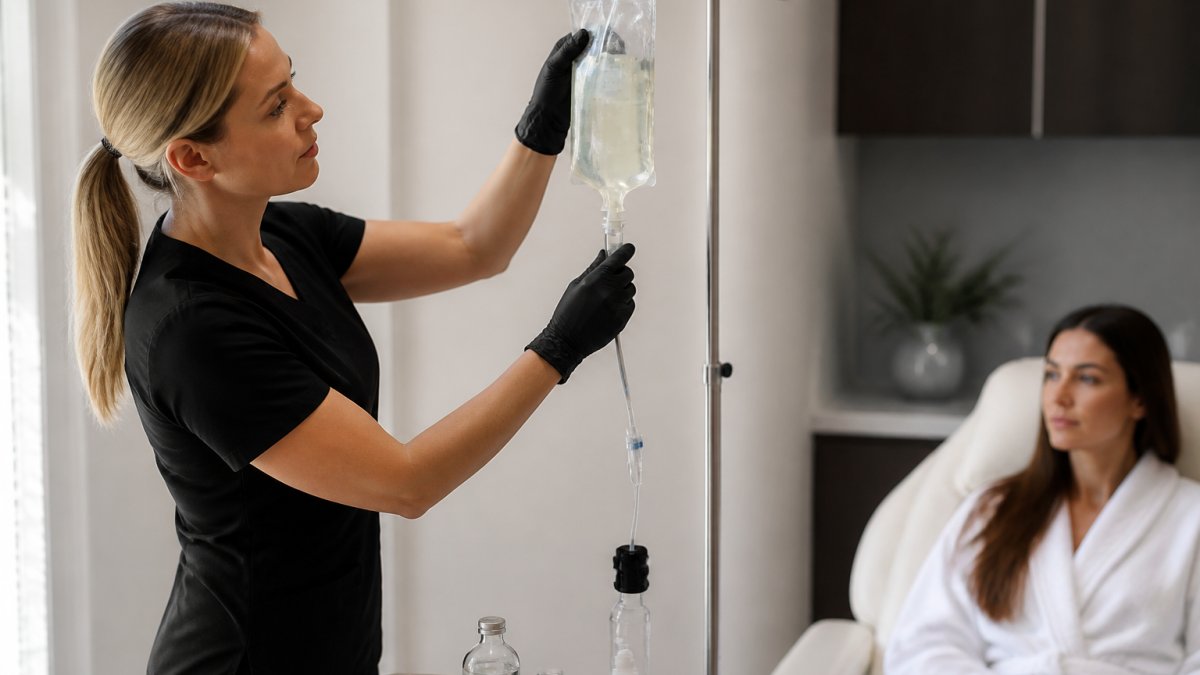
The Difference Between Oral NAD+ and Intravenous Delivery
NAD+ infusion therapy is the intravenous administration of nicotinamide adenine dinucleotide to raise cellular levels directly. Oral NAD+ precursors like NMN and NR must survive digestion, and absorption varies widely between people. Intravenous delivery removes that uncertainty.
| Delivery Method | Absorption | Onset | Best For |
|---|---|---|---|
| Oral capsules | Variable, reduced by digestion | Days to weeks | Maintenance, low commitment |
| Sublingual | Moderate | Hours | Mild support |
| IV infusion | Near-complete | During session | Faster, measurable results |
A common mistake is expecting oral capsules to match infusion results. They don’t, and anyone who has tried both will tell you the difference is obvious.
1. Cellular Energy and ATP Production
ATP is the molecule your cells burn for fuel, and NAD+ is required at nearly every step of producing it. When NAD+ drops, mitochondrial function slows and energy output falls with it.
Patients often describe a shift in energy, and the mechanism behind it is well documented in cellular research. According to National Institutes of Health research on NAD+ metabolism, NAD+ is central to the metabolic pathways that convert nutrients into usable energy.
If fatigue is your main complaint, energy support is usually the first benefit patients notice, often before anything else.
2. DNA Repair and Healthy Aging
Every day, your cells sustain DNA damage from oxidative stress, UV exposure, and normal metabolism. NAD+ activates sirtuins and PARP enzymes, the repair crew that patches that damage.
Age-related decline in NAD+ means slower repair over time. This is one of the most studied areas of longevity medicine, and it’s why researchers treat NAD+ as a marker of cellular health rather than just an energy molecule.
3. Cognitive Function and Mental Clarity
Mental clarity is the benefit patients ask about most, and it is also the one where the gap between marketing and evidence is widest.
The mechanism. NAD+ is a required cofactor for enzymes that sit at the intersection of neuronal energy supply and cellular maintenance. Three pathways matter most for cognition:
- Mitochondrial ATP in neurons. Brain tissue consumes a disproportionate share of the body’s energy budget, and neurons have limited glycolytic reserve. When NAD+ falls, neuronal mitochondria produce less ATP, and the first functions to suffer are the expensive ones, working memory, sustained attention, and processing speed.
- Sirtuin activity (SIRT1, SIRT3). Sirtuins are NAD+-dependent deacetylases involved in synaptic plasticity and stress resistance. Their activity tracks NAD+ availability, which is one reason researchers treat NAD+ as a signaling molecule and not just a fuel cofactor.
- PARP activity and DNA repair in post-mitotic cells. Neurons do not divide, so unrepaired DNA damage accumulates. PARP enzymes consume NAD+ during repair, creating a feedback loop where chronic oxidative stress both depletes NAD+ and slows repair.
What the human evidence actually shows. Most of the strong cognitive data comes from animal models and from studies of NAD+ precursors like nicotinamide riboside (NR) and nicotinamide mononucleotide (NMN), not from IV NAD+ itself. Human trials of oral precursors have shown modest effects on some biomarkers and inconsistent effects on cognitive test scores. There is no large randomized controlled trial demonstrating that IV NAD+ infusions improve cognition in healthy adults. That is the honest state of the field.
What patients report. A common pattern reported in clinical settings is sharper focus and reduced mental fatigue within the first one to two weeks.
The practical takeaway. If cognitive support is your primary goal, NAD+ infusions are a reasonable adjunct to sleep, exercise, and metabolic health, all of which have far stronger evidence for cognition than any infusion.
Cognitive benefits are the most requested and the least proven. Ask any provider to distinguish between mechanism, animal data, and human trial results, a clinic that can’t make that distinction is selling, not treating.
4. Benefits of IV Therapy for Recovery and Performance
Recovery is where nad+ infusions earn their reputation among athletes and executives. Intense training and chronic stress both deplete NAD+, and restoring it supports muscle recovery, reduces systemic inflammation, and shortens the window between hard efforts.
The American College of Sports Medicine notes that recovery protocols matter as much as training load for performance outcomes. NAD+ fits into that recovery category, not the training one.
5. Metabolic Health and Insulin Sensitivity
NAD+ influences how your body handles glucose and lipids. Declining levels are linked to insulin resistance and disrupted lipid metabolism, two hallmarks of metabolic dysfunction.
This doesn’t mean infusions replace diet and exercise. It means they may support the metabolic machinery that those habits depend on. Anyone managing blood sugar should discuss NAD+ therapy with their physician first.
6. Neuroprotection and Brain Health
Most guides treat neuroprotection as a vague promise.
What NAD+ does in brain tissue. Beyond energy supply, NAD+ participates in pathways relevant to neuronal survival:
- Neuroinflammation regulation. NAD+ availability influences microglial activation states. Chronic microglial activation is a common feature across age-related neurodegenerative conditions, and NAD+ depletion is associated with a shift toward a more inflammatory phenotype in preclinical models.
- Mitochondrial quality control. Neurons rely on mitophagy (selective removal of damaged mitochondria) to maintain function over decades. NAD+ supports the sirtuin and PARP signaling that coordinates this process.
- Axonal and synaptic maintenance. NAD+ is consumed by enzymes involved in axonal degeneration pathways, including SARM1. This has made NAD+ biology an active area of research in peripheral neuropathy and traumatic brain injury models.
What the evidence supports, and what it doesn’t. The strongest human data for NAD+ and brain health comes from studies of oral precursors in older adults, which have shown effects on some inflammatory and metabolic markers but not consistent cognitive or functional outcomes.
Who should not receive NAD+ infusions for neurological reasons. This is the part most guides omit:
- Active or recent history of certain cancers. NAD+ supports cellular proliferation pathways, and some tumors upregulate NAD+ biosynthesis. Patients with active malignancy or a recent history should not receive NAD+ therapy without oncologist clearance.
- Seizure disorders. High-dose NAD+ infusions have been associated with reports of transient neurological symptoms, and patients with epilepsy or a seizure history should discuss risk with a neurologist before treatment.
- Pregnancy and breastfeeding. Insufficient safety data; generally contraindicated.
- Medication interactions. NAD+ can interact with medications affecting serotonin, blood pressure, and blood glucose. Patients on SSRIs, MAOIs, antihypertensives, or diabetes medications should have their regimen reviewed before infusion.
- Active infection or acute illness. Immune activation changes NAD+ metabolism; infusing during acute illness is generally deferred.
The practical takeaway. Neuroprotection is a legitimate area of NAD+ research, but it is not a proven clinical benefit.
NAD+ infusions are not appropriate for everyone. Active cancer, seizure disorders, pregnancy, and certain medication regimens are reasons to defer or avoid treatment. A thorough intake screening is not paperwork, it is the safety mechanism.
7. Fatigue Management and Sustained Energy
Fatigue management is different from energy boost. One is a spike. The other is a floor that stops dropping.
Patients on a consistent schedule report fewer afternoon crashes, better sleep quality, and steadier output across the day. That consistency is why frequency matters more than dose for most people.
How long does an NAD+ infusion take?
A typical NAD+ infusion takes 1 to 3 hours depending on dose. Higher doses run slower to reduce side effects like flushing or chest tightness. Most patients read, work, or rest during the session.
NAD+ infusion frequency for anti-aging
A common starting protocol is a loading series of several sessions over 2 to 4 weeks, then maintenance every 4 to 8 weeks. Your provider adjusts based on goals, response, and budget. There’s no single correct schedule.
Faster isn’t better. Pushing a high dose too quickly causes uncomfortable flushing and nausea, and it doesn’t improve results. Let your provider set the drip rate.
What Most Guides Leave Out
Three things separate a good NAD+ experience from a wasted one.
Delivery method matters more than dose. A 500 mg infusion absorbed properly beats a 1,000 mg dose pushed too fast.
Contraindications are real. NAD+ infusions aren’t appropriate during pregnancy, with certain active cancers, or alongside some medications.
Evidence and anecdote aren’t the same thing. Energy and recovery have strong patient reports.
At The Boulevard Wellness, every plan starts with a clinical assessment. This personalized approach helps ensure the protocol fits your unique needs.
Frequently Asked Questions
What are NAD+ infusions good for?
NAD+ infusions are used to support cellular energy production, DNA repair, and cognitive function. Because NAD+ levels decline with age, intravenous delivery bypasses the digestive system and delivers the coenzyme directly into the bloodstream. People commonly seek NAD+ infusions for fatigue, mental clarity, recovery from intense physical activity, and healthy aging support. Research on therapeutic efficacy continues, and a consultation with a qualified provider can help determine whether infusions fit your specific health goals.
How long does a NAD+ infusion take?
Most NAD+ infusions take between one and four hours, depending on the dose and the provider’s protocol. Higher doses are typically administered more slowly to reduce side effects such as nausea or chest tightness. A typical session at a medically supervised clinic includes intake, vital sign checks, and a gradual infusion rate. Your provider will set the pace based on your tolerance and treatment plan, so plan for a longer appointment when scheduling.
How often should you receive NAD+ infusion frequency for anti-aging?
NAD+ infusion frequency for anti-aging varies by individual. Some protocols begin with a loading phase of several sessions over two to four weeks, followed by maintenance infusions every four to eight weeks. Others use a single monthly session. Your age, baseline NAD+ levels, health status, and goals all influence the schedule. A medically guided program adjusts frequency based on how you respond, so discuss timing with your provider rather than following a fixed rule.
Are NAD+ infusions safe, and what are the contraindications?
NAD+ infusions are generally well tolerated when administered under medical supervision, but they are not appropriate for everyone. People who are pregnant or breastfeeding, have active infections, or take certain medications should consult a physician first. Possible side effects include nausea, flushing, chest tightness, and dizziness, which usually ease when the infusion rate is slowed. Always disclose your full medication list and health history before treatment so your provider can assess contraindications and drug interactions.
What does the research say about NAD+ infusion efficacy?
Clinical research on NAD+ infusions is growing but still limited compared with oral supplementation studies. Early trials suggest intravenous NAD+ can raise circulating levels quickly and may support mitochondrial function, metabolic pathways, and neuroprotection. However, many benefits reported by patients, such as sharper focus or faster recovery, are based on anecdotal reports rather than large controlled trials. A 2026 review of the evidence supports cautious optimism while calling for more rigorous human studies.
The gap between feeling fine and feeling optimal usually comes down to cellular health, and most people wait until something breaks before addressing it. The Boulevard Wellness builds personalized longevity programs combining NAD+ infusions, hormone optimization, and peptide therapy, all guided by a multidisciplinary team and delivered in a private setting with concierge-level scheduling. If you’re ready to stop guessing, book an appointment and get a plan built around your actual biology.