
Last Updated: November 1, 2026
Quick Summary
Diet and lifestyle changes that support hormonal health are steady, realistic habits rather than extreme ones. Eat balanced meals with protein, fiber, and healthy fats, limit refined sugar and alcohol, move regularly without overtraining, and keep a consistent sleep routine. Persistent symptoms still need a clinician’s evaluation.
- Eat protein and fat with most meals to slow digestion and steady blood sugar.
- Include fiber from fruits, vegetables, and whole grains across the day.
- Strength train two to three times per week and aim for about 150 minutes of moderate cardio weekly.
- Keep a consistent wake-up time and aim for seven to nine hours of sleep.
- See a qualified clinician if symptoms are persistent, worsening, or affecting daily life.
Table of Contents
- How Diet Affects Hormone Production and Balance
- Foods That Support Hormonal Health
- Foods and Habits to Limit for Steadier Hormones
- Exercise and Hormone Health: Finding the Right Amount of Movement
- Sleep and Hormone Balance: Building a Routine That Helps
- Signs of Hormonal Imbalance and When to Talk to a Doctor
- Booking Your Hormone Health Consultation at The Boulevard Wellness
- Frequently Asked Questions
Hormones run a lot of the body, and most people only notice them when something feels off. Persistent fatigue, a drop in mood, or a midday energy crash often traces back to what you eat, how you move, and how you sleep. Diet and lifestyle changes for hormonal health work best when they are steady and realistic, not extreme. (Source: the National Institutes of Health’s Office of Dietary Supplements)
How Diet Affects Hormone Production and Balance
Your body builds hormones from raw materials, and food supplies most of them. Fats, protein, and carbohydrates all play a part in how your endocrine system runs.
Steady eating matters as much as what you eat.
- Eat protein and fat with most meals to slow digestion
- Include fiber from fruits, vegetables, and whole grains
- Avoid skipping meals for long stretches
- Drink enough water across the day
A common mistake is cutting calories too hard. Under-eating can signal stress to the body and disrupt hormone regulation, so aim for consistent, adequate meals instead.
Foods That Support Hormonal Health
No single food balances hormones on its own, and any article that promises otherwise is overselling the evidence. What the research generally supports is a dietary pattern, not a miracle ingredient, that supplies the raw materials for hormone production, supports steady blood sugar, and helps the body clear excess hormones through digestion. Below is what that pattern looks like in practice, plus how it may shift for common hormone-related conditions.
The nutrients that matter most
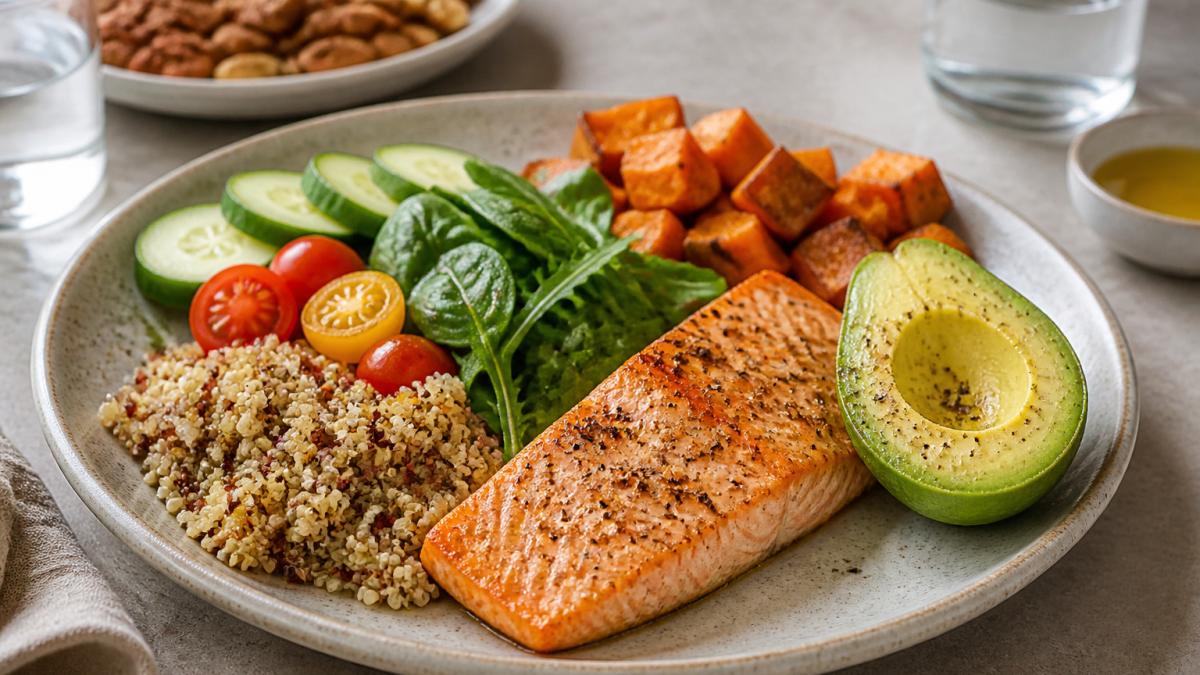
- Healthy fats: avocados, nuts, seeds, olive oil, and fatty fish like salmon and sardines. The body uses cholesterol and fatty acids to produce steroid hormones such as estrogen and testosterone, which is why very low-fat diets can work against hormone health.
- Fiber: vegetables, berries, beans, lentils, and oats. Fiber supports regular elimination, and the digestive tract is one of the main routes the body uses to clear used hormones and their metabolites.
- Zinc and iron: lean meats, shellfish, legumes, and pumpkin seeds. Both minerals are involved in thyroid function and in the production of sex hormones; low intake is common in restrictive diets.
- Cruciferous vegetables: broccoli, cauliflower, Brussels sprouts, and kale. These provide compounds the body uses in processing and clearing hormones, though the effect is modest and should not be framed as a detox.
What the evidence actually supports
It is worth separating general wellness support from treatment of a diagnosed condition. A whole-food pattern rich in vegetables, fiber, healthy fats, and adequate protein is consistently associated with better metabolic and hormonal markers in large population studies. What is far less certain is the idea that a specific food, celery juice, seed cycling, a particular tea, can “rebalance” hormones on its own.
How advice shifts by condition
- PCOS: Lower-glycemic eating patterns, adequate protein, and fiber are commonly emphasized to support insulin sensitivity, which in turn affects androgen levels. Weight management, when relevant, tends to be framed as gradual and sustainable rather than restrictive.
- Thyroid disorders: Adequate iodine, selenium, and iron matter, but excess iodine and raw cruciferous vegetables in very large amounts can be a concern for some people. Anyone on thyroid medication should talk to their clinician before making major dietary shifts.
- Endometriosis: Anti-inflammatory eating patterns, more fatty fish, vegetables, and fiber; fewer processed foods, are often suggested to support symptom management, though evidence is mixed.
- Perimenopause and menopause: Protein, calcium, vitamin D, and healthy fats are typically prioritized to support bone and muscle health as estrogen declines.
A simple day of meals
- Breakfast: oatmeal topped with berries, walnuts, and a spoonful of Greek yogurt
- Lunch: salmon salad with leafy greens, avocado, chickpeas, and olive oil
- Snack: an apple with a small handful of almonds
- Dinner: lean chicken or tofu, roasted broccoli, and sweet potato
Build meals around a protein, a fiber-rich carbohydrate, and a healthy fat. That three-part structure does more for steady energy than chasing individual “hormone foods.”
Shopping guidance
A practical grocery list for the week: leafy greens, broccoli or cauliflower, berries (fresh or frozen), citrus, avocados, eggs, Greek yogurt, canned or fresh salmon, chicken or tofu, lentils and beans, oats, brown rice, sweet potatoes, walnuts, almonds, pumpkin seeds, and olive oil. Frozen and canned options are nutritionally comparable and often cheaper, just watch added sodium and sugar.
Foods and Habits to Limit for Steadier Hormones
Some foods work against steady energy and hormone balance. Cutting back on them often matters more than adding new supplements.
Focus on limiting:
- Refined sugar in drinks, desserts, and snacks
- Processed snacks and packaged baked goods
- Fried foods cooked in heavily reused oil
- Excess alcohol, which can disrupt sleep and liver function
Watch out: crash diets and sudden elimination of whole food groups can backfire. Make changes gradually so you can keep them up long term.
Cutting back on a few everyday habits often helps steady energy and hormone balance more than adding new supplements.
| Limit | Why it matters | Practical swap |
|---|---|---|
| Refined sugar in drinks and desserts | Makes energy and mood unstable | Fruit, plain yogurt, or water |
| Processed snacks and packaged baked goods | Works against steady energy | Nuts, fruit, or whole-food snacks |
| Fried foods in heavily reused oil | Named as a food to limit | Baked or grilled foods |
| Excess alcohol | Can disrupt sleep and liver function | Alcohol-free days |
| Large caffeine amounts late in the day | Can disrupt energy and rest | Cut caffeine earlier in the day |
Exercise and Hormone Health: Finding the Right Amount of Movement
Movement supports hormone health, but more is not always better. Too much intense training without enough recovery can raise stress hormones and disrupt sleep, while too little activity can work against insulin sensitivity and energy. Finding this balance is a foundational step toward effective hormone optimization, which remains essential for those seeking to manage their weight through metabolic health.
A practical weekly structure
Most adults benefit from a mix of activity types:
- Strength training two to three times per week, resistance work supports muscle mass, bone density, and insulin sensitivity, all of which matter for hormone health across life stages.
- Moderate cardio such as brisk walking or cycling, aiming for roughly 150 minutes per week spread across most days.
- Daily light movement like short walks after meals, which can help steady blood sugar.
- Rest and recovery days built into the week rather than treated as a failure.
Pay attention to how you feel. Better sleep, steadier energy, and good recovery usually mean your training load is about right. Constant exhaustion, poor sleep, or a stalled cycle may mean you need to scale back or talk to a clinician.
Connecting movement with the rest of your routine
Exercise does not work in isolation. The habits below reinforce each other, and a complete lifestyle plan addresses all of them together:
- Sleep: Aim for a consistent wake-up time and seven to nine hours in bed. Poor sleep raises appetite and stress hormones the next day, which can make training feel harder and food choices less steady.
- Stress management: Brief daily practices, a ten-minute walk, breathing exercises, or time without screens, can lower the stress load that otherwise competes with hormone balance. Chronic stress is one of the most common reasons lifestyle changes stall.
- Alcohol: Heavy or frequent drinking disrupts sleep and liver function, and the liver plays a role in processing hormones. Cutting back often improves sleep and energy within a few weeks.
- Tobacco and nicotine: These affect circulation and hormone function and are best avoided entirely; quitting is one of the highest-value changes for overall health.
A realistic week might look like: two strength sessions, three brisk walks, one longer weekend hike, a consistent bedtime, and one alcohol-free stretch of several days. Simple, repeatable, and sustainable beats extreme.
Tracking progress without overtesting
You do not need frequent lab work to know whether your routine is working. Track a few non-diagnostic signals instead: sleep quality, morning energy, hunger patterns, mood, workout recovery, and, if relevant, cycle regularity. Bring those notes to a clinician if symptoms persist. Symptoms and lab results require clinical context, and self-ordering panels without interpretation can create more anxiety than clarity.
When to seek care
If fatigue, weight changes, mood shifts, or cycle changes are persistent, worsening, or affecting daily life, see a qualified clinician. Lifestyle changes help many people, but they do not replace a medical evaluation, and no one should start, stop, or change medication based on an article alone.
Sleep and Hormone Balance: Building a Routine That Helps
Sleep is one of the strongest levers for hormone health. Poor sleep affects appetite, stress hormones, and energy the next day.
A simple routine can help:
- Keep a consistent wake-up time, even on weekends
- Dim lights and reduce screens about an hour before bed
- Keep your bedroom cool, dark, and quiet
- Avoid alcohol and heavy meals close to bedtime
Track your sleep for two weeks to spot patterns. Many people find that small, consistent changes make the biggest difference.
Signs of Hormonal Imbalance and When to Talk to a Doctor
Symptoms like fatigue, weight changes, mood shifts, low libido, poor sleep, or trouble recovering from workouts can have many causes.
See a qualified clinician if symptoms are persistent, worsening, or affecting daily life. Blood work can help identify what is going on, and a clinician can explain what results generally mean for you.
For background on how hormone changes are generally evaluated, the Endocrine Society patient resources offer clear, reliable information.
Booking Your Hormone Health Consultation at The Boulevard Wellness
If diet and lifestyle changes are not enough, a structured conversation with a clinician can help you decide on next steps. You can book a consultation to talk through your symptoms and goals with a provider.
A clinician can also explain the difference between lifestyle-focused approaches and medical treatment. For a deeper look at that choice, read our Hormone Therapy vs Lifestyle Changes guide, and to learn more about supervised treatment options, see Hormone Optimization & TRT Dallas.
Frequently Asked Questions
What diet is best for hormonal health?
No single diet fits everyone, but eating patterns built around whole foods tend to support hormone production best. Emphasize vegetables, fruits, legumes, nuts, avocados and fatty fish for healthy fats and fiber, and limit refined sugar, processed snacks and fried foods. Include adequate zinc and iron from food. Changes are most useful when they are consistent and sustainable. A clinician can help you adjust these general principles to your health history, medications and goals.
Which foods may support healthy hormone levels?
Foods that support hormonal health are generally nutrient-dense: vegetables, fruits, whole grains, legumes, nuts, seeds, avocados and fatty fish. Healthy fats support hormone production, and fiber helps the body eliminate excess hormones through digestion. Zinc and iron, found in lean meats, beans and seafood, are also important nutrients. Food alone does not correct a diagnosed hormone disorder, so discuss any concerns with a qualified professional.
Can diet and exercise affect hormones?
Yes, both can influence hormone regulation. Regular physical activity supports insulin sensitivity, healthy body composition and stress management, all of which affect hormone balance. Overtraining or very low energy intake, however, can disrupt hormone levels. Aim for a mix of aerobic activity and strength training that you can sustain, and adjust intensity if you notice persistent fatigue or changes in your cycle or energy.
When should I talk to a healthcare professional about hormone symptoms?
Consider an evaluation if you have persistent fatigue, unexplained weight changes, irregular periods, low libido, sleep disruption, mood changes or reduced recovery that do not improve after a few months of lifestyle changes. Lab testing and a review of your history can identify what is going on. Bring a log of your symptoms, diet and sleep patterns to your appointment. Only a qualified clinician can diagnose a hormone condition or recommend treatment.
Individual results vary. This article is general information and is not a substitute for personal medical advice. Speak with a qualified healthcare professional before starting any new diet, supplement, or treatment.
