
Last Updated: October 22, 2026
Quick Summary
How to stack BPC-157 and TB-500 safely requires medical oversight, proper dosing (typically 250-500 micrograms BPC-157 daily and 2-2.5 mg TB-500 weekly), administering them separately at different injection sites, and working with a qualified clinician who sources pharmaceutical-grade peptides and monitors your progress closely.
- BPC-157 targets localized tissue repair while TB-500 promotes broader cell migration and blood vessel formation across multiple tissues.
- Common dosing includes a 4-6 week loading phase followed by maintenance dosing, with total protocols typically lasting 8-16 weeks.
- Never mix BPC-157 and TB-500 in the same syringe; administer them separately at different injection sites to prevent local concentration issues.
- Human clinical data on this stack is extremely limited; most evidence comes from animal studies and anecdotal reports, not controlled trials.
- Stop treatment immediately and seek emergency care if you experience chest pain, severe dizziness, difficulty breathing, or signs of infection.
Table of Contents
- Understanding BPC-157 and TB-500: What They Are and How They Differ
- Why People Combine These Peptides: The Recovery Stack Rationale
- Safe Dosage and Loading Protocols for the BPC-157 and TB-500 Stack
- BPC-157 and TB-500 Side Effects: What to Monitor
- BPC-157 and TB-500 Interactions: Medication Compatibility and Contraindications
- What Human Studies Show About the BPC-157 and TB-500 Stack
- Key Questions to Ask Your Peptide Therapy Clinician Before You Start
- When to Stop and Seek Medical Care
- Frequently Asked Questions
Understanding BPC-157 and TB-500: What They Are and How They Differ
BPC-157 is a synthetic peptide derived from a protective compound found in gastric juice. TB-500 (also called TB4) is a naturally occurring peptide that plays a role in cell building and repair. Both are used in recovery protocols, but they work through different mechanisms. (Source: animal studies on BPC-157’s effects on wound healing and inflammation)
The key difference lies in their targets. BPC-157 focuses on localized tissue repair, tendons, ligaments, and the gut lining. TB-500 works more broadly, promoting cell migration and blood vessel formation across multiple tissue types.
Understanding how to stack BPC-157 and TB-500 safely requires knowing what each does independently first. BPC-157 has shown activity in wound healing and inflammation reduction in animal studies (pubmed.ncbi.nlm.nih.gov). TB-500 supports angiogenesis (new blood vessel formation) and collagen deposition (pubmed.ncbi.nlm.nih.gov).
At The Boulevard Wellness, we emphasize that peptide therapy requires medical oversight. The combination approach appeals to athletes and high performers seeking accelerated recovery, but safety depends on proper dosing, monitoring, and professional guidance.
Peptide therapy exists in a gray regulatory area. These compounds are not approved by the FDA for human use. Quality and purity vary significantly between suppliers. Work only with a qualified clinician who sources from verified pharmaceutical-grade suppliers.
Why People Combine These Peptides: The Recovery Stack Rationale
The appeal of stacking BPC-157 and TB-500 together stems from their complementary actions. BPC-157 targets specific injured tissues.
Athletes and fitness enthusiasts often pursue this combination after significant injuries, torn ligaments, muscle strains, or chronic tendon issues.
However, the evidence supporting this stack in humans is anecdotal. Most data comes from animal models or individual reports, not controlled clinical trials.
The combination also appeals to those seeking to optimize recovery between training cycles. High performers in Dallas and beyond use peptide stacking as part of broader longevity and performance protocols.
Stacking these peptides is based on complementary mechanisms, not proven synergy in humans. The real benefit depends on proper dosing, quality peptides, and consistent monitoring by a qualified clinician.
Safe Dosage and Loading Protocols for the BPC-157 and TB-500 Stack
Dosage recommendations for how to stack BPC-157 and TB-500 safely vary based on individual factors and clinical judgment.
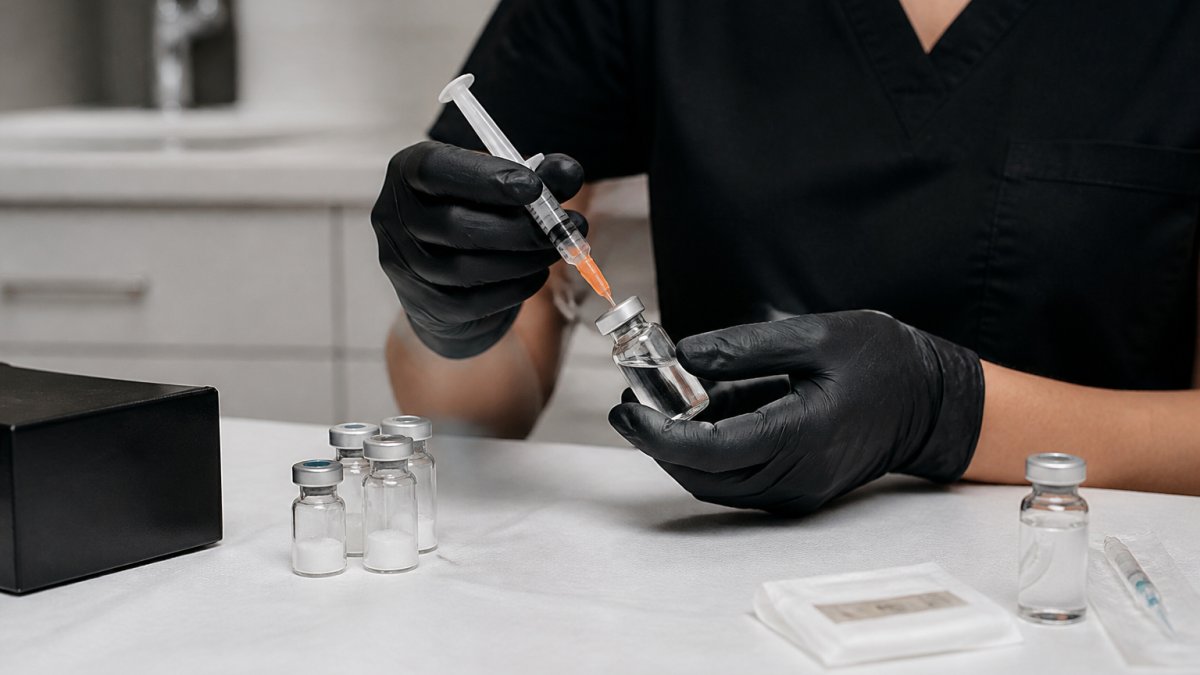
Common dosing approaches include:
- BPC-157: Typically 250-500 micrograms per day, administered via subcutaneous injection
- TB-500: Usually 2-2.5 mg per week, split into smaller doses or given as a single weekly injection
- Loading phase: Many protocols begin with higher doses for 4-6 weeks, then move to maintenance dosing
- Maintenance phase: Reduced doses taken 1-2 times weekly for ongoing support
The loading and maintenance schedule differs between protocols. Some clinicians recommend a 4-week loading period followed by 8 weeks of maintenance.
Reconstitution and administration:
- Both peptides arrive as lyophilized (freeze-dried) powder in vials
- Reconstitution requires bacteriostatic water (sterile water with benzyl alcohol preservative)
- Injections are typically subcutaneous, though some protocols use intramuscular administration
- Timing matters: spacing injections 12-24 hours apart prevents local irritation
- Store reconstituted peptides in the refrigerator (2-8°C) for stability
The actual protocol depends on your injury type, recovery timeline, and clinician’s experience. Loading doses are higher initially to build peptide concentration in tissues.
Never mix BPC-157 and TB-500 in the same syringe. Administer them separately, ideally at different injection sites. This prevents local concentration issues and makes it easier to adjust either peptide independently if needed.
BPC-157 and TB-500 Side Effects: What to Monitor
Most people tolerate BPC-157 and TB-500 well when dosed appropriately. Serious adverse events are rare in reported cases, but monitoring remains essential because long-term human safety data is limited.
Common mild side effects include:
- Localized injection site reactions (redness, mild swelling, discomfort)
- Temporary appetite changes
- Mild dizziness or lightheadedness
- Headache
- Nausea (usually brief)
These typically resolve within hours to days. If they persist beyond a few days, inform your clinician immediately.
Less common but more serious considerations:
- Potential blood pressure changes (TB-500 affects vascular tone)
- Allergic reactions to the peptide or reconstitution agent
- Infection at injection sites if sterile technique is compromised
- Unexpected interactions with medications you’re taking
The lack of extensive human studies means uncommon side effects may not yet be documented. This is why working with an experienced clinician matters.
If you experience chest pain, severe dizziness, difficulty breathing, or signs of infection (fever, spreading redness, warmth at injection site), seek emergency care immediately. These warrant urgent medical evaluation regardless of whether you think they’re related to the peptides.
BPC-157 and TB-500 Interactions: Medication Compatibility and Contraindications
Before starting how to stack BPC-157 and TB-500 safely, disclose all medications and supplements to your clinician. Peptide therapy can interact with certain drugs, though direct interactions are not well-characterized in humans. (Source: research on TB-500’s role in angiogenesis and collagen deposition)
Potential concerns include:
- Blood pressure medications: TB-500 may affect vascular function. If you take antihypertensives, your clinician may need to monitor blood pressure more closely.
- Anticoagulants or blood thinners: Peptides that promote angiogenesis theoretically could interact with anticoagulation therapy. Discuss this with both your cardiologist and peptide clinician.
- Immunosuppressants: If you take medications that suppress immune function, peptide therapy may have unpredictable effects.
- NSAIDs: Long-term use of nonsteroidal anti-inflammatory drugs may blunt some healing benefits of peptide therapy. Your clinician can advise on timing.
Who should avoid BPC-157 and TB-500 stacking:
- Pregnant or breastfeeding women (no safety data exists)
- People with active cancer (peptides promote cell growth; safety is unknown)
- Those with severe liver or kidney disease (metabolism pathways are unclear)
- Anyone with a history of allergic reactions to peptides or benzyl alcohol
- People taking certain psychiatric medications without clinician approval
Many people take peptides without serious problems. But the lack of extensive human trials means individual risk profiles vary. Your clinician should review your complete medical history before recommending this stack.
What Human Studies Show About the BPC-157 and TB-500 Stack
Here’s the honest truth: human clinical data on how to stack BPC-157 and TB-500 safely is extremely limited. Most evidence comes from animal studies, in vitro research, or anecdotal reports from users.
What animal research suggests:
- BPC-157 shows activity in wound healing, tendon repair, and reducing inflammation in rodent and other animal models
- TB-500 promotes cell migration, blood vessel formation, and collagen deposition in various tissue types
- Combined administration in animals shows complementary effects on tissue repair
What human data actually shows:
- No large-scale, randomized controlled trials comparing the stack to placebo in humans
- A small number of case reports and observational studies describe positive outcomes, but these lack control groups
- Most human evidence is anecdotal: athletes and patients reporting faster recovery after using these peptides
This gap between animal promise and human evidence is crucial. Animal models don’t always predict human outcomes. Dosing that works in mice may not translate directly to people.
The decision to use BPC-157 and TB-500 rests primarily on theoretical benefit, animal evidence, and individual clinical judgment, not on proven efficacy in humans. This is why working with an experienced clinician is non-negotiable.
The Boulevard Wellness approach emphasizes this uncertainty upfront. We discuss the evidence honestly, set realistic expectations, and monitor closely for both benefits and problems.
Key Questions to Ask Your Peptide Therapy Clinician Before You Start
Before beginning how to stack BPC-157 and TB-500 safely, ask your clinician these specific questions:
About sourcing and quality:
- Where do you source your peptides? Can you verify pharmaceutical-grade purity?
- Do you test vials for contamination and potency before administering them?
- What happens if a vial fails quality testing?
About your specific protocol:
- Why is this stack appropriate for my injury or condition?
- What dosages are you recommending, and why those specific amounts?
- How long is the loading phase? The maintenance phase?
- How will you adjust dosing if I’m not responding or experiencing side effects?
About monitoring:
- How often will you reassess my progress?
- What metrics will you track (pain, range of motion, imaging, other)?
- What signs would prompt you to stop treatment?
- How will you monitor for interactions with my other medications?
About safety and alternatives:
- What are the realistic risks for someone with my medical history?
- Have you treated patients with my specific injury before? What were the outcomes?
- What non-peptide alternatives should I consider?
- If this doesn’t work, what’s the next step?
About cost and expectations:
- What’s the total cost for the full protocol?
- Does this include follow-up visits and monitoring?
- If I stop early, what’s the refund or credit policy?
- How will you know if the treatment is working?
A clinician who answers these questions clearly and without pressure is more trustworthy than one who rushes you into treatment or makes absolute guarantees.
When to Stop and Seek Medical Care
Knowing when to discontinue peptide therapy is as important as knowing how to use it. Stop immediately and seek medical attention if you experience:
- Chest pain or pressure
- Severe shortness of breath
- Fainting or severe dizziness
- Signs of infection (fever above 101°F, spreading redness, warmth, pus at injection site)
- Severe allergic reaction (swelling of face or throat, difficulty breathing, rash)
- Uncontrolled bleeding or severe bruising
Also contact your clinician if:
- You’re not seeing improvement after 8-10 weeks of treatment
- Side effects worsen or don’t resolve within days
- You develop new symptoms you didn’t have before
- Your other medications need adjustment
- You become pregnant while on peptide therapy
The Boulevard Wellness emphasizes that peptide therapy is a tool, not a guaranteed solution.
Don’t stay on a protocol that isn’t working just because you’ve invested time or money. Recovery requires flexibility and professional judgment. A good clinician will reassess regularly and adjust course when needed.
The decision to stack BPC-157 and TB-500 requires honest conversation with a qualified clinician who understands both the potential benefits and the real limitations of current evidence. At The Boulevard Wellness, our approach prioritizes your safety and realistic outcomes over hype.
Frequently Asked Questions
Can BPC-157 and TB-500 be used together safely?
When combined under medical supervision, many practitioners report that BPC-157 and TB-500 can be used together as part of a recovery stack. BPC-157 is thought to support tissue repair and blood flow, while TB-500 may promote cell migration and collagen formation. However, human clinical data on this combination is limited. Safety depends on proper dosing, source verification, individual health status, and compatibility with any medications you take. Always work with a qualified clinician to assess your specific situation before beginning.
What is the Wolverine stack, and how does it relate to BPC-157 and TB-500?
The ‘Wolverine stack’ is informal terminology referring to a peptide combination designed to enhance recovery and tissue repair, typically including BPC-157 and TB-500 along with other peptides. The name reflects the idea of rapid healing. This is not a medical term and carries no regulatory approval. The stack’s composition and dosing vary widely depending on individual protocols and clinician recommendations. Results are largely based on anecdotal reports rather than large human studies.
Are BPC-157 and TB-500 FDA-approved?
Neither BPC-157 nor TB-500 are approved by the FDA for human use. Both remain investigational compounds in the United States. They are not available through standard pharmaceutical channels and are sometimes sourced through research chemical suppliers or compounding pharmacies. This lack of approval means regulatory oversight of manufacturing, purity, and labeling is limited. Before considering these peptides, discuss their regulatory status, product sourcing, and quality assurance practices with your clinician.
What should I ask a peptide therapy clinician before starting BPC-157 and TB-500?
Ask about the source and purity testing of the peptides, whether they are reconstituted in bacteriostatic water, the specific loading dose and maintenance dose protocol, injection frequency and timing, expected timeline for results, potential side effects and how to monitor them, any interactions with your current medications, contraindications based on your health history, their experience with this combination, and under what circumstances you should stop and seek emergency care. Request documentation of their medical credentials and malpractice insurance.
