
Quick Summary
Peptide therapy uses synthetic versions of the short amino acid chains your body uses to send signals between cells. Claims that it supports thyroid health are mostly based on early or animal studies, so the evidence is weak. Most peptides marketed for thyroid support lack credible human data, and thyroid disease should be evaluated by a clinician.
- Approved peptide drugs have documented dosing and regulatory review, unlike many compounded or research-grade peptides.
- Most peptides marketed for thyroid support fall into the weak or no evidence categories.
- No peptide is an established treatment for thyroid nodules or thyroid cancer.
- Never stop or change prescribed levothyroxine because of a peptide without your prescriber’s direction.
- Core thyroid labs include TSH, free T4, free T3, and TPO antibodies.
Table of Contents
- What Peptide Therapy Is and How Peptides Work
- How Thyroid Function, Hashimoto’s, and Hypothyroidism Fit Together
- Evidence Grading: What Research Shows for Each Peptide and Thyroid Outcome
- Peptides and Thyroid Nodules, Thyroid Cancer, and Other Thyroid Conditions
- Thyroid Peptide Bioregulators: What the Term Means and Its Limits
- Medication Interactions, Product Quality, and Who Should Avoid Peptide Therapy
- Booking Your Thyroid Evaluation: Questions to Bring to a Clinician
- Frequently Asked Questions
Peptide therapy is one of the more talked-about approaches in wellness medicine right now, and the claims around thyroid support are often bolder than the evidence. This guide covers what peptide therapy is, how thyroid function and autoimmune conditions like Hashimoto’s fit together, what research shows, and what to ask a clinician.
National Institute of Diabetes and Digestive and Kidney Diseases overview of thyroid disease
What Peptide Therapy Is and How Peptides Work
Peptides are short chains of amino acids, the same building blocks that make up proteins. Your body produces many of them naturally to send signals between cells.
Not all peptides behave the same way. Some are approved medicines with decades of study.
- Approved peptide drugs have documented dosing, known side effects, and regulatory review.
- Compounded or research-grade peptides may vary in purity and dose from one batch to the next.
- Claims about thyroid benefits are often based on early or animal studies, not large human trials.
Before starting any peptide, ask where it is made and whether the product has been independently tested.
How Thyroid Function, Hashimoto’s, and Hypothyroidism Fit Together
Your thyroid is a small gland in the front of your neck.
When the thyroid produces too little hormone, the result is hypothyroidism. Common symptoms include fatigue, weight gain, feeling cold, and low mood.
Hashimoto’s thyroiditis is the most common cause of hypothyroidism in the United States. It is an autoimmune condition where the immune system produces thyroid antibodies that slowly damage the gland.
Evidence Grading: What Research Shows for Each Peptide and Thyroid Outcome
Peptide claims are easy to make and hard to verify. Grading the evidence helps you see how much weight each claim can bear.
| Evidence Level | What It Means | Example Claim Status |
|---|---|---|
| Strong | Multiple large human trials with clear results | Established medicines with thyroid-related indications |
| Moderate | Some human data, but small or short studies | Limited clinical trials in related conditions |
| Weak | Animal or lab data only | Most peptides marketed for thyroid support |
| None | No credible data for the thyroid claim | Marketing claims without citations |
Most peptides marketed for thyroid support fall in the weak or none categories. That does not mean they never work. It means the claim has not been tested well enough to rely on.
Peptides Discussed for Immune Regulation and Thyroid Antibodies
Some peptides, such as thymosin alpha-1, are studied for their effects on immune activity. Researchers have examined whether immune-modulating peptides could influence the autoimmune process behind Hashimoto’s. Human evidence specific to thyroid antibody levels remains limited, so this is an area for cautious interest rather than a proven treatment.
Peptides Discussed for Tissue Repair, Gut Health, and Inflammation
Peptides like BPC-157 and KPV are often promoted for tissue repair, gut health, and inflammation. Some readers link gut health to thyroid autoimmunity, but this connection is still being studied. Most data on these peptides comes from animal models, so claims about thyroid benefit should be treated as hypotheses.
Peptides and Thyroid Nodules, Thyroid Cancer, and Other Thyroid Conditions
Thyroid nodules are common lumps in the gland, and most are benign. Readers exploring regenerative options can learn what regenerative and stem cell therapy involves and whether it is offered in the Dallas area.
Some searches for “peptides and thyroid cancer” reflect real fear about cancer risk. Ask your clinician before using any peptide if you have a personal or family history of thyroid cancer.
Thyroid Peptide Bioregulators: What the Term Means and Its Limits
“Peptide bioregulator” is a term used in some wellness marketing for short peptides claimed to act on specific organs, including the thyroid. It is not a standard medical category, research on these compounds is sparse, and much of it comes from a small number of groups.
When you see the phrase, look for three things:
- Human clinical trials, not just lab or animal work
- Independent replication outside the company selling the product
- A clear explanation of how the peptide would reach and affect thyroid tissue
If those are missing, the term describes a marketing idea more than a proven mechanism.
Medication Interactions, Product Quality, and Who Should Avoid Peptide Therapy
Peptides are not automatically compatible with the medications you already take. Interaction risk depends on the peptide, dose, route, and what else is on your medication list, the part of peptide therapy most marketing pages skip, and the part a clinician will want to review first.
How Peptides Can Interact With Thyroid Treatment
Levothyroxine is the most common thyroid replacement medication in the United States. It has a narrow therapeutic window, meaning small changes in absorption or dose can shift TSH and free T4 in ways that affect how you feel. A few interaction patterns are worth understanding:
- Absorption interference. Products taken by mouth can bind levothyroxine in the gut and reduce how much is absorbed. Calcium, iron, and fiber supplements are well-known examples; any new oral peptide should be reviewed for the same possibility.
- Immune modulation. Peptides studied for immune effects could, in theory, alter immune activity in people with autoimmune thyroid disease. Whether that helps, hurts, or does nothing to thyroid antibodies has not been established in human trials.
- Metabolic and energy effects. Some peptides are promoted for energy and metabolism. If they change appetite, weight, or activity, they can change how thyroid hormone requirements are interpreted on labs.
Treatment Sequencing: Do Not Stop or Adjust Prescribed Medication
A common and dangerous pattern is a patient who starts a peptide and reduces or stops levothyroxine because they feel better or because a seller suggested the peptide replaces thyroid hormone.
A safer sequence looks like this:
- Confirm your current thyroid diagnosis and labs with your prescriber.
- List every medication, supplement, and peptide you are considering, with dose and route.
- Ask whether any of them could affect levothyroxine absorption or thyroid labs.
- Agree on a monitoring plan and a review date before starting anything new.
- Keep thyroid medication timing consistent, and separate oral products as your clinician advises.
Watch out: if a seller tells you a peptide can replace your thyroid medication, treat that as a reason to pause and talk to your prescriber, not as a treatment plan.
Product Quality and Regulatory Status Vary by Compound
Approval and quality are not uniform across the peptide market. Food and Drug Administration has warned about compounded and research-use peptides sold online, and maintains a category of bulk drug substances that compounders may not use because of safety or effectiveness concerns (the FDA).
Quality problems to watch for include:
- Wrong dose or concentration compared with the label
- Contaminants or improper manufacturing
- No independent testing of identity and purity
Ask where the product is made, whether a third-party certificate of analysis is available, and whether the compound appears on any FDA list of substances that should not be compounded. If those answers are missing, the product is not ready for a clinical decision.
Who Should Avoid Peptide Therapy or Seek Extra Review
Some people should not start peptide therapy without a careful individualized medical review, and some should avoid it entirely until their situation is clarified:
- Pregnant or breastfeeding women, because safety data are lacking and hormone changes are already in flux.
- People with active cancer or a history of thyroid cancer, because immune and growth-signaling effects are not well characterized in this group.
- People with other autoimmune conditions, because immune-modulating peptides could affect more than the thyroid.
U.S. Food and Drug Administration guidance on compounded drugs
Booking Your Thyroid Evaluation: Questions to Bring to a Clinician
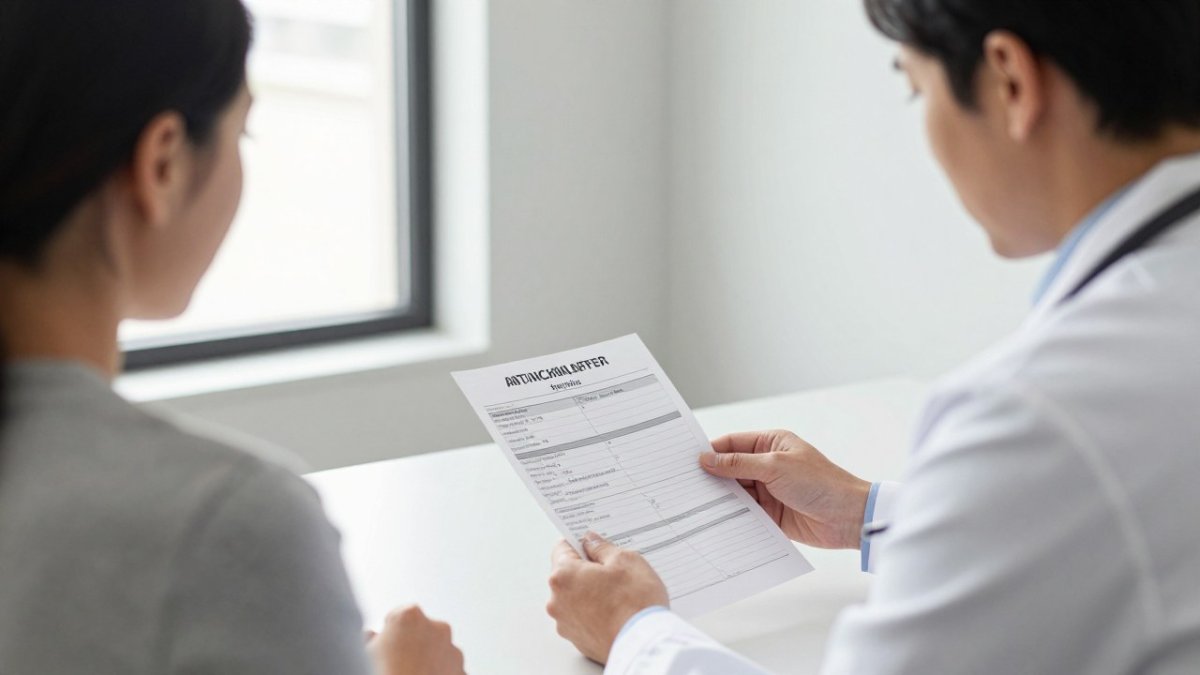
A good thyroid evaluation is a process, not a single appointment. The goal is to establish what is actually going on before adding anything new, including a peptide. Most practitioners follow a similar sequence: history and exam, targeted labs, interpretation in context, a treatment plan, and scheduled follow-up.
Step 1: Establish the Diagnosis Before Discussing Peptides
Start with a clinician who will take a full history: symptoms, timing, family history of thyroid or autoimmune disease, medications, supplements, pregnancy status, and any neck lumps or swallowing changes. A neck exam can check for an enlarged or nodular thyroid; if a nodule is found, ultrasound or fine-needle biopsy is the standard next step, not a peptide protocol.
Step 2: Get the Right Thyroid Labs
The core labs most clinicians order are:
- TSH, the primary screening test for thyroid function
- Free T4, to see how much thyroid hormone is available
- Free T3, when conversion or symptoms suggest it is useful
A common pattern is to check TSH and free T4 first, then add antibodies and free T3 based on symptoms and history. Labs should be interpreted together and in the context of symptoms, not as isolated numbers.
Step 3: Review Symptoms Alongside the Numbers
Symptoms such as fatigue, weight change, cold intolerance, constipation, and low mood can point to hypothyroidism, but they overlap with many other conditions. Track symptoms in a simple log before your appointment so your clinician can compare them with lab trends over time and you have a baseline to measure future change against.
Step 4: Agree on a Monitoring Plan
If thyroid medication is started or adjusted, most clinicians recheck TSH and free T4 about six to eight weeks later, roughly how long the pituitary-thyroid axis takes to settle. Antibody levels are usually checked less often, since they change slowly and do not always track symptoms. If a peptide is added, agree in advance on what will be measured, when, and what result would prompt a change.
Step 5: Know When to Seek Specialist Care
Ask for an endocrinology referral if you have a thyroid nodule, a suspected thyroid cancer history, difficult-to-control thyroid levels, pregnancy with thyroid disease, or symptoms that do not fit the lab picture. A specialist can also help when autoimmune thyroid disease is complicated by other autoimmune conditions.
Questions to Bring to Your Appointment
- What thyroid tests do you recommend, and what do my results mean together?
- Do I have Hashimoto’s, and should we check thyroid antibodies?
- Which treatments have human evidence for my specific condition?
Set Realistic Endpoints
Distinguish symptom changes from lab changes. Feeling more energetic is meaningful to you, but it does not by itself prove a treatment changed thyroid function. Measurable endpoints include TSH, free T4, free T3, and thyroid antibody levels, along with a symptom log.
If you are ready to talk through your options, you can book a clinically supervised hormone consultation or contact The Boulevard Wellness Center to arrange an appointment. You can also schedule a wellness appointment in Dallas when you are ready. For a deeper look at safety questions, read whether peptide therapy is safe for beginners.
Frequently Asked Questions
What is the best peptide for thyroid issues?
No peptide has been shown in rigorous human trials to treat thyroid disease. Most peptides discussed for thyroid support, such as BPC-157, KPV, larazotide, and thymosin alpha-1, are supported mainly by animal studies, small trials, or mechanistic reasoning rather than outcome data in people with hypothyroidism or Hashimoto’s. Thyroid hormone replacement, such as levothyroxine, is the established treatment for hypothyroidism in the United States. Any peptide decision should be made with a qualified clinician who can review your thyroid labs, antibody levels, and current medications.
Are peptides safe for people with thyroid nodules or thyroid cancer?
There is not enough human evidence to say peptide therapy is safe for people with thyroid nodules or thyroid cancer. Some growth-related peptides raise questions for people with a history of cancer, so this is a situation where you should not start anything without oversight from your endocrinologist or oncology team. Nodules and cancer need imaging and, when indicated, biopsy and specialist management. Peptides should never replace that care.
Can peptide therapy help Hashimoto’s disease?
Hashimoto’s thyroiditis is an autoimmune condition, and some peptides are discussed for immune balance, but no peptide has been established as a treatment for it in clinical trials. Standard care includes monitoring thyroid-stimulating hormone and thyroid antibody levels and, when needed, thyroid hormone replacement. If you are considering peptide therapy, ask your clinician what outcomes they would track and how they would judge whether it is helping.
What should I ask a clinician before considering peptide therapy for thyroid support?
Ask what the evidence is for the specific peptide proposed and whether it has been studied in people with your condition. Ask where the product is sourced, whether it is compliant with FDA rules for compounded or research-use products, and how the quality is verified. Ask how it could interact with your levothyroxine or other medications, what side effects to watch for, and how success will be measured. Confirm who will monitor your labs and who to call if something goes wrong.
